
|
|
||||||||||||||||||


| 2026-2027 Electoral Calendar, latest official version |

|
 |
|
|
|
|
|
|
|||||||
|
|
Haiti - Reconstruction : Back home, not for tomorrow... 12/02/2011 11:04:04
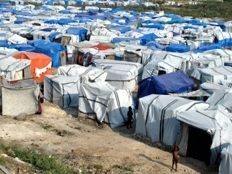
Last Thursday, during the briefing of the United Nations in Haiti, Léonard Doyle, spokesman for the International Organization for Migration (IOM) in Haiti has made an update on the situation of victims in the camps and the concerns of IOM. "The number of people living in camps has decreased significantly, close to half a million people left. To date, 810.000 Haitians still live in camps. However, in the coming months, the displaced living in camps could be exposed to certain dangers, although they continue to leave. With the rainy season that approaches, in addition to the risks of floods, the cholera epidemic is also likely to spread. So what will happen in the camps when the rains will arrive ? The reality is there and NGOs do not have enough resources to cope. What would be the solutions? We need to provide as soon as possible alternatives to facilitate the relocation of IDPs. In our opinion, we must find sustainable solutions, such accelerated the construction of transitional shelters, repair damaged houses, building sustainable housing, remove debris and restore neighborhoods and communities. These are the elements of the strategy to cope with potential dangers of the coming months, but the resources are not really available to implement this strategy as soon as possible. The crisis is far from over, the humanitarian needs persist, and the reconstruction process should begin soon enough to help people leave the camps and settle in communities." For its part, Emmanuelle Schneider, spokeswoman for the Office for the Coordination of Humanitarian Affairs (OCHA) in Haiti, spoke about the back into communities and relocation of displaced persons, specifying that these returns can be sustainable only if they are accompanied of income generating activities, access to water, health and education. She also raised the problems of evictions that refugees are confronted with owners who want their land back. "There are several options for people displaced: either the return to their places of origin, where they lived before the earthquake, the relocation in the provinces where they are from, because they own land or friends or families are ready to welcome them, or as a last resort, the relocation to a site planned. We know today that over 56% of individuals report being tenants before the quake, while 36% reported owning. We also know that on the 380.000 homes assessed after the earthquake, 53% of them can be employed without danger (green category), 26% percent present dangers of access (yellow) and 20% are dangerous and should either be repaired or demolished (red) It is important to note that households will leave the camps, according to the options of their choice. Basic services will then be gradually available in the communities of return and will decrease gradually in the camps. The returns will be sustainable only if they are accompanied by income-generating activities through programs such as access to microcredit. Access to water, health and education, food aid within the framework of the school feeding program will also be priorities. When we evokes the problem of the return into communities, the issue of forced evictions is asked. The camps have existed for over one year and, as time passes, the threats of evictions increased. The humanitarian lead daily operations of mediation with the landowners, local authorities and residents of camps to find solutions of relocation or durable solutions." HL/ HaitiLibre
|
|









|
|
Why HaitiLibre ? |
Contact us |
Français
Copyright © 2010 - 2026 Haitilibre.com |