
|
|
||||||||||||||||||


| 2026-2027 Electoral Calendar, latest official version |

|
 |
|
|
|
|
|
|
|||||||
|
|
Haitian biodiversity, a major economic lever 31/03/2026 10:09:02
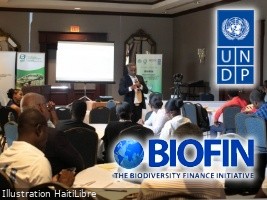
A recent analysis presented by the Ministry of the Environment and the United Nations Development Programme (UNDP - Haiti) in March 2026 estimates the value of Haiti's coastal ecosystems at USD 9.57 billion per year. It should be noted that this colossal amount does not correspond to direct monetary revenue (such as GDP), but rather represents an estimate of the potential contribution to resilience in terms of the Total Economic Value (converted to monetary value) of the services provided free of charge by nature. Distribution of Value by Ecosystem Service : While the exact breakdown by ecosystem is complex, studies on coastal services in Haiti generally allocate this value as follows : - Protection against storms and erosion (approx. 40-50%): This is the most significant item. Mangroves and reefs prevent billions of dollars in damage to coastal infrastructure by absorbing wave energy during hurricanes. - Support for fisheries (approx. 20-30%): Marine ecosystems are vital breeding grounds. Over 82% of fish production in Haiti depends on the health of these habitats. - Carbon sequestration (approx. 10-15%): The "blue" carbon stored by mangroves has market value on the global carbon market and plays a key role in mitigating climate change. - Tourism and recreation (approx. 5-10%): Despite security challenges, the potential of beaches and reefs for local and international tourism remains a major economic driver, particularly in the South. On March 26, 2026, the United Nations Development Programme (UNDP) and the Haitian Ministry of the Environment brought together some fifty public, private, and academic stakeholders in Port-au-Prince to validate the policy and institutional analysis, the first step in the UNDP Biodiversity Financing Initiative (BIOFIN), launched in 2012. BIOFIN in Haiti : Haitian biodiversity is not just a natural heritage. It is a major economic driver. 97% of the funding dedicated to its preservation comes from external aid, a current model that is not sustainable. Objective : to lay the foundations for more structured, autonomous, and sustainable national financing. Four priorities emerge : - Establish dedicated national budget lines - Explore innovative mechanisms, including debt-for-nature swaps - Strengthen institutional capacities - Fully integrate gender considerations This assessment paves the way for the future National Biodiversity Financing Plan. Beyond policies, the challenge is strategic : - Make biodiversity a driver of economic resilience and sustainable development. Biodiversity is not a cost. It is an investment. Investing in its protection means : - Supporting livelihoods - Boosting local economies - Securing the future of generations to come HL/ S/ HaitiLibre
|
|









|
|
Why HaitiLibre ? |
Contact us |
Français
Copyright © 2010 - 2026 Haitilibre.com |