
|
|
||||||||||||||||||


| 2026-2027 Electoral Calendar, latest official version |

|
 |
|
|
|
|
|
|
|||||||
|
|
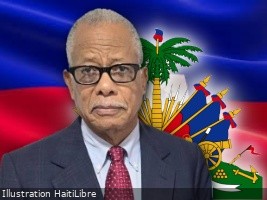
Haiti - 222nd anniversary of Independence : Vibrant speech by the Ambassador of Haiti to the Dominican Rep. 02/01/2026 09:20:56
On Thursday, January 1st, 2026, on the occasion of the 222nd anniversary of Haiti's independence (January 1st, 1804), the Haitian Ambassador to the Dominican Republic, Emmanuel Fritz Longchamp, delivered a powerful message of reflection for the new year, which we are publishing for the benefit of our many readers and which we invite you to read and share. Message from Ambassador Emmanuel Fritz Longchamp : "Ladies and Gentlemen, Dear compatriots, On this day of remembrance and reflection, we commemorate an event that transcends the scope of a simple national date. January 1st, 1804, marks a major turning point in world history. Two hundred and twenty-two years later, Haitian independence remains at once a glorious legacy, a moral imperative, and an ongoing political challenge. At first glance, we must revisit the long historical journey that led to 1804. As early as 1791, the slaves of Saint-Domingue, torn from Africa and denied their humanity, launched an unprecedented struggle against one of the most violent systems in history. This revolution was not merely military; it was anthropological, philosophical, and political. It posed a fundamental question : can a human being be considered property ? On January 1st, 1804, in Gonaïves, Jean-Jacques Dessalines proclaimed Haiti's independence and affirmed, in words of exceptional force, the definitive break with the colonial and slave-owning order, declaring : 'If there could be a lukewarm heart among us, let it depart and tremble at the oath that must unite us. Let's swear to the entire world, to posterity, to ourselves, to renounce France forever and to die rather than live under its domination; to fight to our last breath for the independence of our country.' This proclamation was not a mere legal act: it constituted a true declaration of dignity. Dessalines affirmed that, henceforth, on this land, no one would be a slave, no one would be inferior by nature, and that the freedom won by blood would be defended at all costs. This date also marks what can be called the revolution in the way of working. For the first time in the modern world, an economic system founded on slavery was abolished and replaced, at least in principle, by a relationship to work that respected human dignity. Former slaves then became aware that slavery was not merely a social condition, but a denial of humanity itself. This realization constitutes one of the most profound legacies of the Haitian Revolution to the universal concept of human rights. '1er janvye 1804 pa sèlman yon evènman istorik ; se yon zak politik revolisyonè ki kraze fondasyon panse enperyalis yo sou dominasyon ak sou pretandi enferyorite moun nwa. Ayiti leve kanpe kòm manman libète, epi libète rete kondisyon fondamantal pou lavi ak diyite pèp yo.' However, commemorating 222 years of independence also requires a clear-eyed and critical look at our own trajectory. For Haiti’s history since 1804 is not solely one of heroic resistance; it is also one of internal betrayals, political dictatorships, and the domination of elites who, all too often, have governed against the will of the masses in social, economic, and political matters. These practices have led, over the decades, to a gradual erosion of institutions, culminating in the unprecedented institutional collapse that Haiti is experiencing today. The collapse of the Haitian state is not an accident of history : it is the product of chronic misgovernance, systematic social exclusion, and a profound rupture between the state and society. It is in this context that we must understand the mass migration of Haitians, particularly to the Dominican Republic. This migration is neither a choice of comfort nor a cultural inevitability: it is a survival strategy. It acts as a safety valve for a people deprived of prospects in their own country; above all, it reveals the collective failure to make independence a lived reality. Faced with this situation, the fundamental question remains: what is the central issue today for the stabilization and rebuilding of the Haitian State ? The answer, in my view, lies in a return to a socio-political agenda based on human life itself, what contemporary thought calls biopolitics : a policy that places security, dignity, health, education, and the value of life at the heart of public action. This orientation deeply resonates with Dessalin's consciousness, not in its radicalism, but in its vision of Haiti as a space where genuine freedom must be paramount. Given this reality, the time for sterile divisions and narrow calculations is over. History calls us to a collective awakening. Meeting the challenges faced by Haiti today demand that we come together, beyond particular interests, political divisions, and social affiliations. It is about rebuilding the State around what is essential: human life, dignity, security, and the future of our children. Faithful to the spirit of 1804, we must transform inherited independence into a lived independence, by reconstructing a national project founded on responsibility, solidarity, and respect for every citizen. Haiti can only survive by becoming a place where living is not an act of constant resistance. As Jean-Jacques Rousseau reminded us : 'Man is born free, and everywhere he is in chains.' Haiti’s historical mission is precisely to break these chains, not only in its founding texts, but in the concrete reality of every citizen. On this 222nd anniversary, let us pay tribute to the heroes of 1804, not by mythologizing them, but by responsibly embracing their legacy. Independence is not a static achievement; it is an ongoing political project. It is to this level of awareness that we must, even today, elevate our collective action. On this day commemorating National Independence Day and at the dawn of the new year 2026, it is my particular pleasure to extend my warmest greetings to the Presidential Advisors and members of the Government of the Republic of Haiti, to the diplomatic and administrative staff of the Embassy, to the Consular Posts of the Diplomatic Mission in the Dominican Republic, and to the diplomatic missions of the Republic of Haiti accredited throughout the world. I would like to express my deepest gratitude to the Haitian people, whose resilience, courage, and unwavering commitment to the ideals of freedom and sovereignty form the bedrock of our nation. May 2026 bring peace, stability, and renewal to the Republic of Haiti. God bless Haiti ! Thank you." Emmanuel Fritz Longchamp HL/ HaitiLibre
|
|









|
|
Why HaitiLibre ? |
Contact us |
Français
Copyright © 2010 - 2026 Haitilibre.com |