
|
|
||||||||||||||||||


| 2026-2027 Electoral Calendar, latest official version |

|
 |
|
|
|
|
|
|
|||||||
|
|
Haiti - FLASH : Trump forces 7 Caribbean countries to welcome expelled asylum seekers 19/01/2026 09:03:57
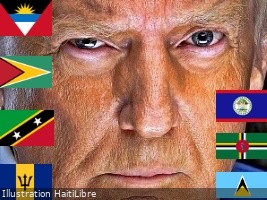
The United States Government has concluded pressure negotiations with 7 member countries of the Caribbean Community (CARICOM) : Guyana, Dominica, Saint Lucia, Antigua and Barbuda, Belize, Saint Kitts and Nevis and Barbados. These agreements aim to guarantee the reception of asylum seekers deported from the United States and unable to return to their country of origin. Terrence Drew, Prime Minister of Saint Kitts and Nevis, highlighted the challenges of these tense negotiations : "Countries refusing to cooperate are exposed to indirect sanctions from the United States, including restrictions on visas and difficulties in international banking exchanges (correspondent banking)". Delicate decisions between economic pragmatism and political submission. The signatory countries of this agreement have negotiated conditions : Obligatory clean criminal record for each refugee; full funding by the United States (transport, accommodation, food aid) and priority to nationals of the CARICOM zone in a situation of migratory impasse. The Barbadian Government does not hide its dissatisfaction. Kerrie Symmonds, Minister of Foreign Affairs, describes the agreement signed as "unwilling", highlighting the pressure exerted by Washington, which is difficult for small island economies to ignore. Antigua and Barbuda imposed a cap of 10 asylum seekers per year; fluency in English and mandatory professional training; initial right of residence limited to 24 months termination clause within 90 days. Terrence Drew, Prime Minister of Saint Kitts and Nevis and current President of CARICOM, announced that his country will not receive Haitian refugees, citing security concerns. This decision highlights tensions within CARICOM, where Haitian immigration is sometimes seen as a zsilent invasionz. Guyana, in full economic growth, sees this situation as an opportunity. The country, facing a labor shortage, is seeking to attract nearly 80,000 qualified workers. However, this initiative arouses strong criticism from the local opposition, who denounces the reception of "people whom other countries do not want". The Organization of Eastern Caribbean States (OECS) has established a technical team to oversee the implementation of these agreements. The United States has set a cap of 7,500 refugees for this relocation program for the year 2026. SL/ HaitiLibre
|
|








|
|
Why HaitiLibre ? |
Contact us |
Français
Copyright © 2010 - 2026 Haitilibre.com |